Providence’s Davey Lopes Recreation Center Sparks Community Concerns
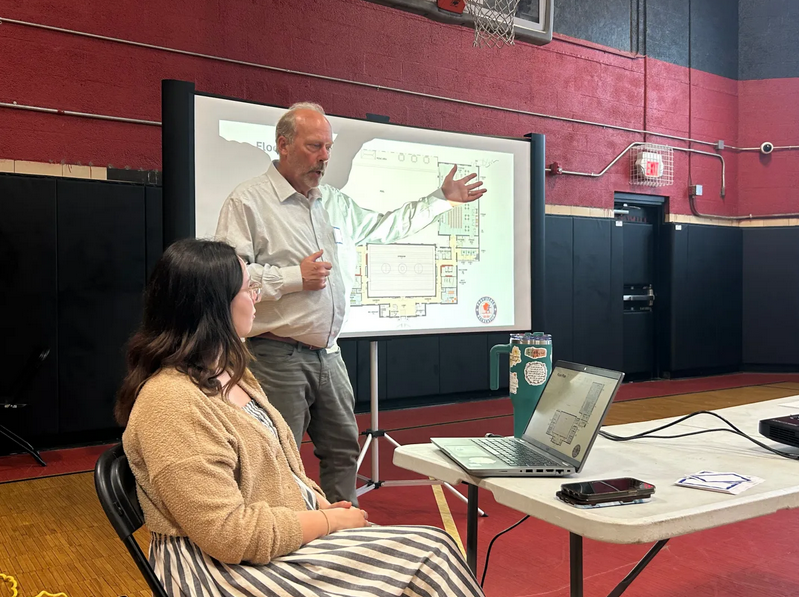
June 10th, 2025, members of the South Providence community met with city planners to discuss the future renovation efforts of the Davey Lopes Recreation Center in the building’s gymnasium. This renovation project is one of three across South Providence’s recreation centers aimed at modernizing the buildings for future use. The renovations are funded by the Capital Improvement Fund’s grant from the Biden administration, which totals $60.2 million, in hopes of fostering a strong community recovery from COVID-19. Although the improvements will help modernize the dated Davey Lopes Recreation Center, South Providence community members like Kai Cameron worry that these renovations will also stray the center away from community needs and provide another example of the city of Providence’s lackluster community engagement efforts.
With $8.6 million allotted to the project, capital improvement project manager Ben Lobaugh expects to renovate the rec center to its “full capacity”. This includes first working on wide infrastructural improvements like a new HVAC system, a fire safety system, and electrical improvements, while also improving structural elements like the roof and the entrance foyer. On top of the unseen renovation efforts, the grant will also cover more cosmetic and functional aspects of the rec center, including a new multipurpose room to replace the unsalvageable old indoor pool and renovating the bathrooms. The plans also highlight a new community room, which will feature a computer lab (called the Zoom room) and give community members a space to use Zoom and other features to take remote job interviews and other personal uses.
Architect Steve, who is one of the three architects on the project, explains, “The bones of the building are good, but it needs to be brought up to current standards and upgraded. The facility needs to be upgraded, and the technology needs to be updated so that Providence Recreation has a good foundation to move forward with in serving the community. We're really impressed with what they've been able to do and accomplish so far with this existing facility in its current condition, and we're hoping that the work that gets done here takes it forward.”
The most substantial improvement is the new multipurpose room that is replacing the indoor pool area-turned boxing gym. Even years after the pool area was shut down, in instances of heavy rainstorms, water backs up and floods the gym. The city hopes that the multipurpose room will be used not only for recreational activities like camp movie nights or dodgeball, but also for educational purposes and programs that are run through the grant’s funding.
Multiple community members worry that incorporating educational elements and more community-focused spaces, such as the Zoom room, diverts the recreational center’s direction away from being a children’s recreation center and makes it more about the adult community. In response to the complaints made during the meeting, Lobaugh affirmed that he understood the qualms but explained that to utilize the grant money, the city had to incorporate both community services and workplace training in all of the recreation centers. The first “pillar” outlined in the grant was that improvements need to be made to include a place for community members to use computers in a private environment to take job interviews or telehealth services; this requirement is met through the aforementioned Zoom rooms. The second pillar is a requirement to monitor community health, basically outlining a need for health education and connections. This requirement is met through the multipurpose center itself.
“That was one part that we had to kind of dance around, which is that the funding was meant to be for those kinda of educational programs. Technically, you know, the grant professionals' work allows us to do upgrades and recreation. So that for this space we can do holistic upgrading of the entire building, and this space is able to get air conditioners. But if this building were freestanding and didn't have these other spaces, we couldn't use the grant money for this building,” said Loubaugh
Loubaugh and the architects explained that incorporating these “pillars” into the design means that not only will the city have the money to modernize the infrastructure of the building and keep Davey Lopes running well, but they will also be able to add another layer of community use to the building. Although Lobaugh expressed that planning the renovations was complicated due to the tight requirements of the grant, he thinks the architects managed to find a noninvasive way to incorporate the requirements that also adds to the building's ability to function as a recreational center.
“My concern is always that the community is here. It has a space at the table, but I know from my own professional experience that getting community to participate in a meeting like this is challenging, so I challenge those that have the authority and power to be able to outreach to make sure that whatever they're bringing into the community is what the community actually wants,” said longtime community member and activist Kai Cameron, “As a community person, I've lived here like I said, for 50 years, I'm at the point now where I'm just really kind of up to here with people putting things in without asking, without being able to take my limit and be able to say what It is that I need and what I want.”
Cameron’s concerns are not necessarily with the design plans themselves, but rather with the lack of communication that the city of Providence had between the planning/architect team and the community. A tense back-and-forth followed this conversation, where the city’s representatives attempted to explain that they did have a thorough community engagement process, and multiple community members pushed back against the efforts made. It was revealed that the renovation plans (which were already solidified by this meeting) were discussed with the community at one meeting in April that was attended by just two community members. At this first meeting, the renovation plans were just a concept, and the community was able to give more substantial input into the final design, but since it was attended by just two residents, at the current meeting, the community present felt like their needs weren’t met.
“Community is based on relationship building, so you have to have relationships with the people that you consider community. So with emails, okay, I didn't get an email. The only reason why I came here this evening is that I happened to come into the center asking the question, so then I saw the flyer. So flyers are good, but you know what? Flyers need to be in mailboxes, and postcards need to be sent. And also, I'll say this before, and to any city department that will listen. Not everybody doesn't uses Facebook. Everybody doesn’t do social media,” continues Cameron.
One of the complaints leveled against the city’s community engagement process was that there was no cross-pollination between multiple projects. With the other two renovation projects for the South Providence recreation centers, those meetings were attended by upwards of 60 to 70 residents, but the emails collected in those meetings (through sign-up sheets) are only applicable to those projects. The community present feels that the city of Providence treats every project or community engagement effort as something to be started from ground zero, independent of other projects. Although other community meetings across South Providence were well attended, the fruits of those conversations and the relationships built had no impact on Davey Lopes’ renovations.
The second concern from the conversation is that when that information is collected by the city, community members feel that the city treats the process like another check on the box of something that they have to do. The city uses extensive questionnaires and spreadsheets of community needs and interests in how they navigate planning projects, but there isn’t a continued conversation with community members. Community members don’t feel like they have a place at the table, but instead, they are just words on a page with an impact that they can’t feel (even though it is taken into consideration).
The Davey Lopes renovation starts August 16, but before then, the city plans on hosting one more community meeting to talk about the entire renovation process and what it looks like for the community when the recreation center is shut down for renovation. The date of the meeting has not yet been decided.
